Health and Wellness Website Designer: How to Choose One
When you start looking for a health and wellness website designer, the questions pile up fast.
Will they understand how a therapy, health coaching, or concierge medicine practice works? Do they know what a health website needs to stay compliant? Will my website look like everyone else’s? And once it launches, will anyone be able to find it on Google and AI search engines?
These are all smart questions to ask because working with a good health and wellness website designer can save you from a costly redesign a few years down the road.
I’m Rose Benedict, a brand and Showit website designer for therapists and health and wellness practitioners. With more than 11 years of design experience, I’ve learned that a good fit comes down to a handful of important factors.
Below, I’ll walk you through what a health and wellness website designer does and what to look for, so you can go into your discovery calls knowing which questions to ask.
What Does a Health and Wellness Website Designer Do?
At first, the answer seems simple. A website designer designs your website. But a lot goes into launching a website that brings in new clients, and much of that work isn’t obvious or even visual.
A health and wellness website designer typically takes care of:
- Planning your site map and page structure so visitors and search engines can follow it easily
- Designing your pages to look and work well on desktop and mobile
- Building your website on a platform like Showit, WordPress, or Squarespace
- Setting up on-page SEO, including page titles, meta descriptions, headings, and image alt text
- Connecting your website to Google Search Console and Google Analytics
- Making sure contact forms are HIPAA-compliant when they collect protected health information
- Adding the disclaimers, privacy policy, and terms of use your practice may need
- Compressing images and improving page speed so your site loads quickly
- Following accessibility best practices, like readable font sizes and strong color contrast
- Integrating your booking, scheduling, or client portal tools
- Setting up redirects if you’re moving from an old website so you don’t lose existing search traffic
- Training you to make simple updates on your own after launch
At the same time, your designer should create a website that looks like your practice and no one else’s.
Health and wellness is a crowded space, and many practice websites start to look alike. A custom design with distinctive details, even subtle ones like a thoughtful font pairing or a custom illustration, helps you look established and makes your practice easier to remember.
Aesthetics vs technical details
Health and wellness website design is both aesthetic and technical work. Your website must be beautiful, but a designer who focuses only on how your website looks will often produce a dysfunctional end result.
For example, if your page structure is unclear or your headings are out of order, Google and AI search engines have a harder time understanding what you offer and who you help. Over time, fewer people find you, and the website you invested in stops bringing in inquiries.
What about health and wellness branding?
Many health and wellness website designers also create your branding, including your logo, color palette, fonts, and the overall look and feel of your practice.
Your website is often the first place a potential client meets your brand, so it helps when both are built from the same plan by the same person. That consistency builds trust with people who are making personal decisions about their health and well-being.
Learn more about health and wellness branding.
How to Choose a Health and Wellness Website Designer
It’s important to compare designers to find the best fit, and it’s a normal part of the process to have a discovery call with multiple professionals.
These 7 factors will help you figure out who you should work with.
1. Experience with health and wellness practices
A designer with health and wellness experience will already understand the rules that shape your website. That can save you from some difficult situations later on.
For example, if you’re in the US and your business is classified as a covered entity under HIPAA, your contact form collects health information, it needs to be HIPAA-compliant. Your website may need disclaimers that explain what your services do and don’t include. And if you’re a therapist, many ethics codes restrict how you can use client testimonials, so the usual “add reviews to your homepage” advice doesn’t apply to you.
Your designer should also understand the difference between coaching and licensed care like therapy, nutrition counseling from a Registered Dietitian, or physical therapy. A wellness coach and a licensed therapist can help with similar concerns, but the language each one can use on their website is very different.
On a discovery call, ask how they handle HIPAA-compliant forms and disclaimers. A designer with health and wellness experience will have a clear answer.
2. An aesthetic you love and that feels custom
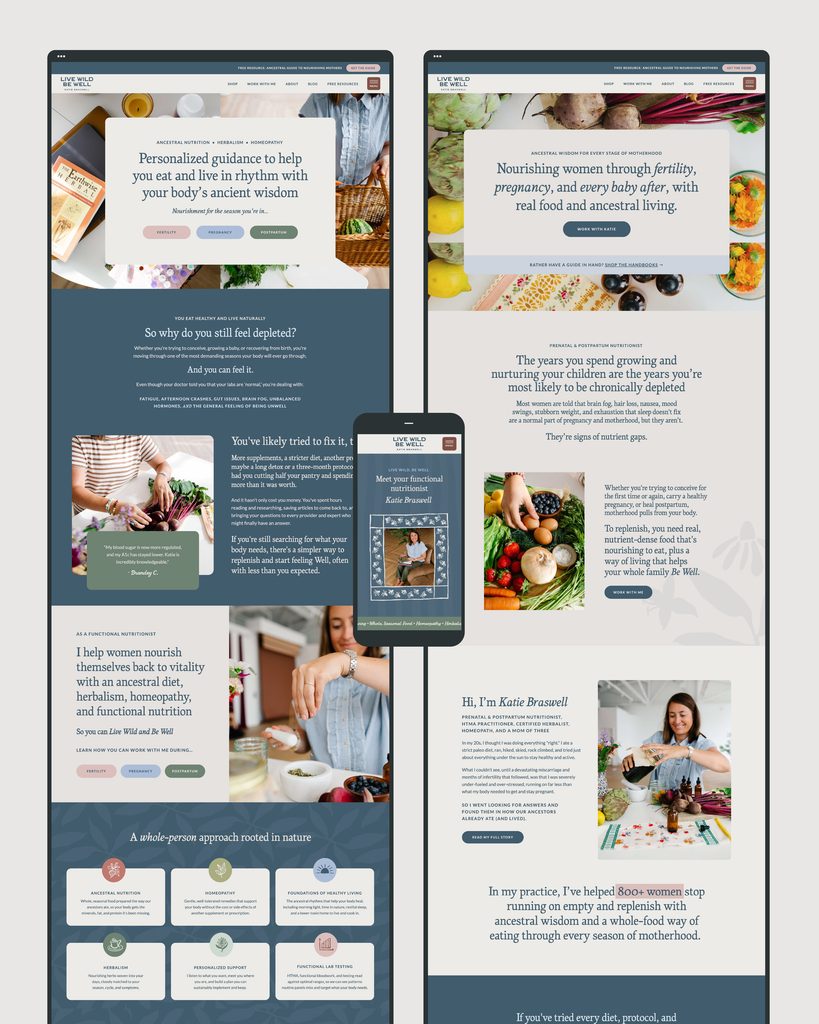
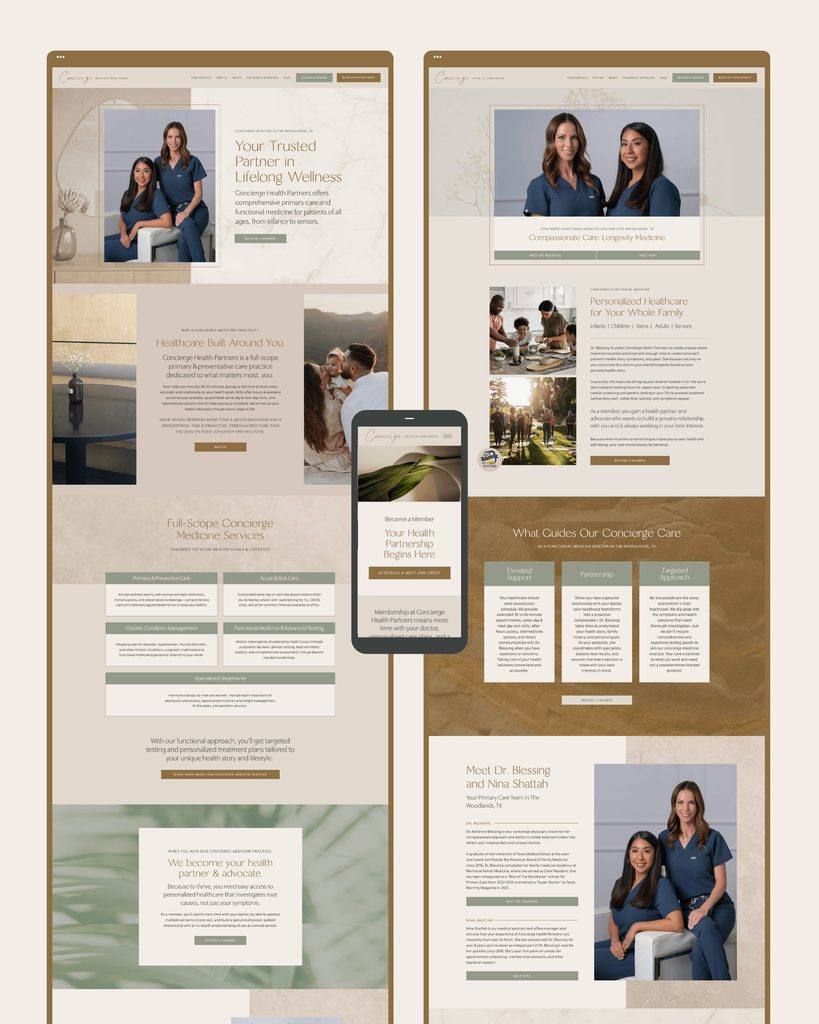
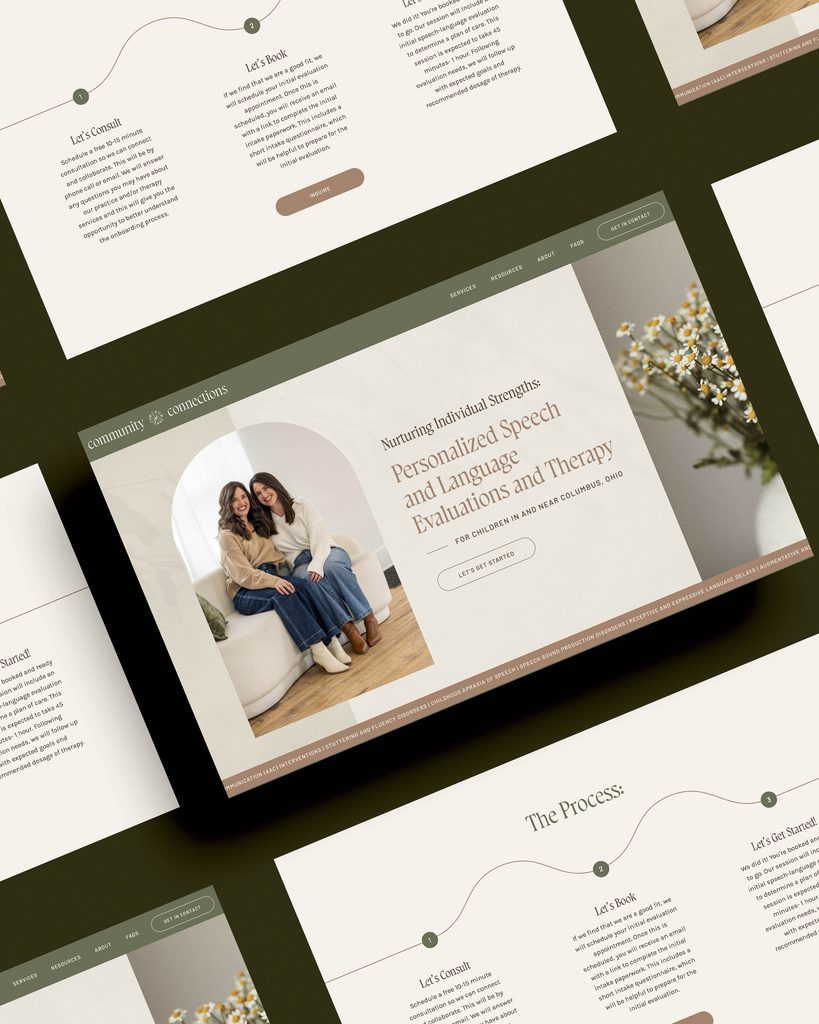
You should like a designer’s overall style. If their portfolio doesn’t appeal to you, it’s unlikely your finished website will.
But style is only part of it. Look at a few of their projects and notice whether each one feels distinct. If every website uses the same layout with a new color palette, you’ll probably get something similar. As the health and wellness industry grows, a distinctive look helps you stand out and look professional.
Take a look at my Portfolio to see if you like my earthy and sophisticated style.
3. Technical knowledge
A beautiful design still has to function well. Your designer should be comfortable with the technical side of launching a website, including:
- Making sure every page loads quickly and works on phones and tablets
- Following accessibility best practices so more people can use your website
- Recommending HIPAA-compliant form and scheduling tools when you need them
- Connecting your domain and setting up redirects from your old website
- Integrating the client portal, booking, or email tools you already use
- Connecting your website to Google Search Console and Google Analytics
- Setting up all SEO elements correctly
It also helps to ask what happens after launch. A good designer will walk you through your website’s backend and show you how to make small updates on your own, like changing your hours or swapping a photo. Some designers also include a recorded training or a guide you can come back to later.
This puts you in a confident position as a practice owner. You’ll understand how your website is set up, and you won’t have to wait on someone else for every small change.
4. SEO and AI search skills
Many people now find health and wellness providers through Google and AI tools like ChatGPT and Google’s AI Overviews. Your designer should build your website in a way that search engines can understand.
Each core service should have its own page, headings should follow a logical order, and page titles should describe what’s on the page. Your location, credentials, and the people you help should be easy to find. AI search tools tend to pull from websites that answer questions clearly and directly, so well-organized pages help you there, too.
That said, website design is only one part of SEO and AI search optimization. The words on your pages play a big role in whether you rank. Search engines and AI tools rely on your copy to understand what you offer and who you help, so it needs to be written with both clients and search in mind.
Many website designers partner with copywriters, but not every copywriter is skilled in SEO. A well-connected designer can recommend copywriters who know how to research keywords, structure pages for search, and write in your voice.
Before you hire a designer, ask a few questions about how they approach SEO:
- What SEO setup is included in your website design packages?
- Do you write the website copy, or do you work with copywriters?
- Can you recommend copywriters who specialize in SEO for health and wellness?
Their answers will tell you how much SEO support is included in the project and where you may need extra help.
5. Past projects and proof of client growth
A portfolio shows you what a designer can create, but testimonials and results show you what happened after the website launched. Look for designers who can point to health and wellness clients who saw more inquiries, better-fit clients, or more referrals.
Ideally, you want to see numbers or other tangible proof instead of testimonials that praise how beautiful the website is.
6. The website platform they design on
Most designers specialize in one or two platforms. The platform you choose affects your creative flexibility, how easy it is to update your website yourself, and which SEO tools you can use, so it’s an important decision not to take lightly.
As a Showit Design Partner, I design all of my websites on Showit.
It’s a great platform for therapy practices, concierge medicine practices, functional nutritionists, doulas, coaches, and other health and wellness brands that want a custom-looking, easy-to-manage website. Showit gives me full creative freedom, and I can also design the desktop and mobile versions of your website separately.
After launch, you can update text, swap photos, and make small changes with a drag-and-drop editor, without touching any code. For blogging, Showit connects with WordPress, which gives you a strong set of SEO tools for publishing content that helps you rank.
Ask any designer why they chose their platform and what updating your private practice website will look like after launch.
7. A clear, organized design process
Building a website usually takes at least a few weeks, and you’ll be making a lot of decisions along the way. A clear process makes that much easier.
Before you sign, a designer should be able to tell you what’s included, how long the project will take, what they need from you, and when. Look for set milestones, a defined number of revision rounds, and a simple way to share feedback and files.
Pay attention to how organized they are during the discovery process. The way a designer handles your inquiry and first call is usually a good preview of what working together will feel like.
Hi, I’m Rose Benedict—a Health and Wellness Website Designer
I’m a brand and Showit website designer based in Columbus, Ohio, and I work with health and wellness practices across the US and Canada. Since opening my studio in 2022, I’ve helped practitioners build brands and websites that look polished, feel personal, and make it easy for the right clients to reach out.
Most of my clients are practice owners who are great at their work but feel like their current website doesn’t reflect it. I work with:
- Therapists and group therapy practices
- Concierge medicine and functional medicine practices
- Physical therapists, including neurologic and specialty practices
- Speech and language therapists
- Doulas
- Health and wellness coaches
- Nutritionists and dietitians
- Other health and wellness practitioners who serve clients one-on-one or in small groups

Every project starts with strategy. Before I design anything, I learn about your clients, services, and what you want people to feel when they land on your website. From there, I create a brand and website that fit your practice and support it as it grows.
I design every website on Showit, a platform for custom design that’s still simple for practice owners to manage on their own.
Health and Wellness Website Design Examples
Here are a few of my recent brand and website projects for health and wellness practices. You can see more examples of my work in my Portfolio.
Live Wild Be Well
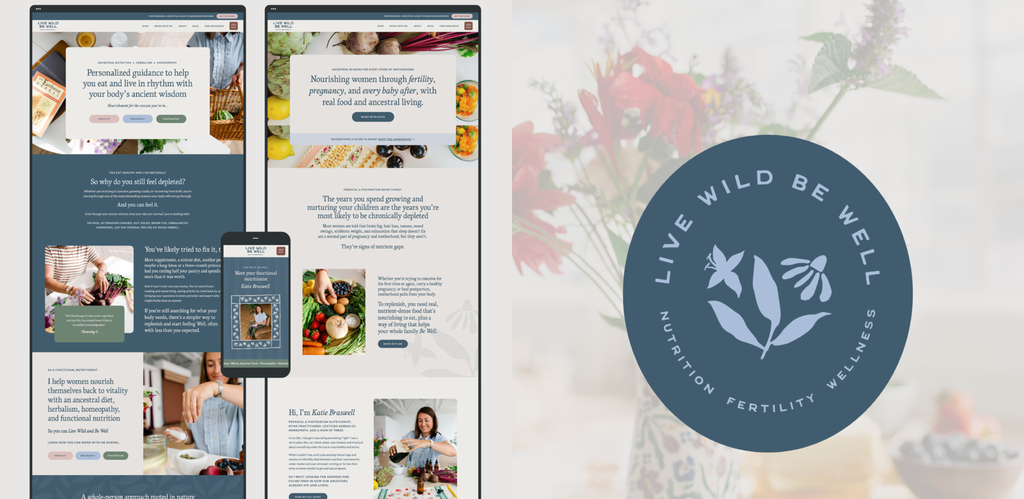
Live Wild Be Well is the functional nutrition practice of Katie Braswell, who has supported women through fertility, pregnancy, and postpartum for more than eight years. Her business had grown well past her old website, and she needed a new one that reflected her practice.
As part of the project, Katie’s offers were clarified and grouped by life stage, so the new website lets visitors browse by offer or by where they are in their journey. Moving her website from Squarespace to Showit, with a WordPress blog, also meant fixing technical issues that had kept years of her blog posts from being indexed by Google.
Custom animations, custom-coded design elements, and blog features that pull her freebies, handbooks, and courses into related posts give her website a distinctive feel that positions her as a trusted expert across every offer.
Concierge Health Partners
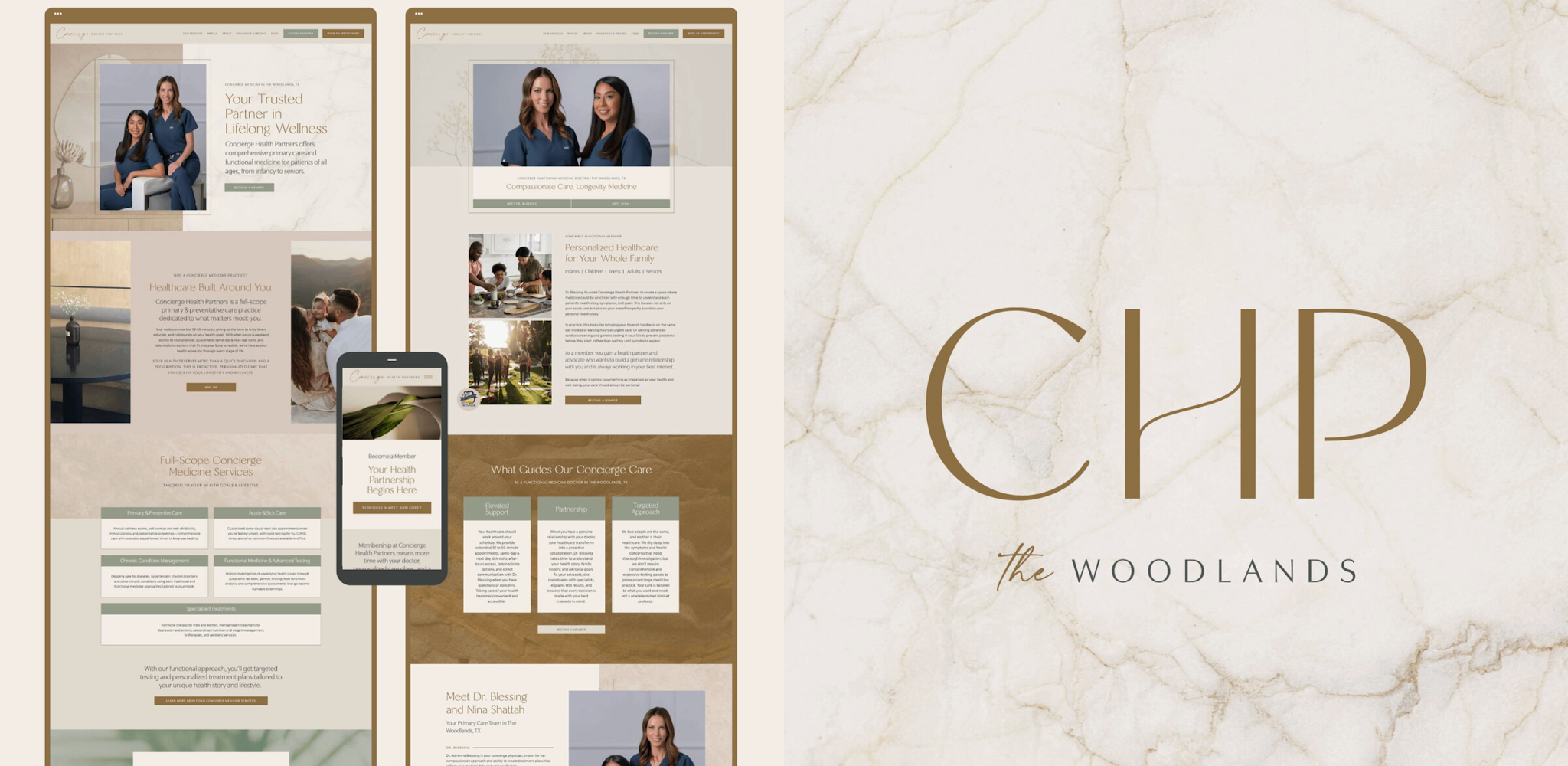
Concierge Health Partners is a family practice in The Woodlands, Texas, offering concierge primary care and functional medicine. Their office has a calm, organic feel, and they wanted their brand to reflect that same atmosphere while still looking like a trusted medical practice.
I paired a bronze script logo with clean, modern lettering and built the brand around warm neutrals, soft sage, and stone-like textures. Their Showit website is SEO-optimized and HIPAA-compliant, and it helps prospective members understand their care options before they join.
Integrative Psychotherapy and Wellness
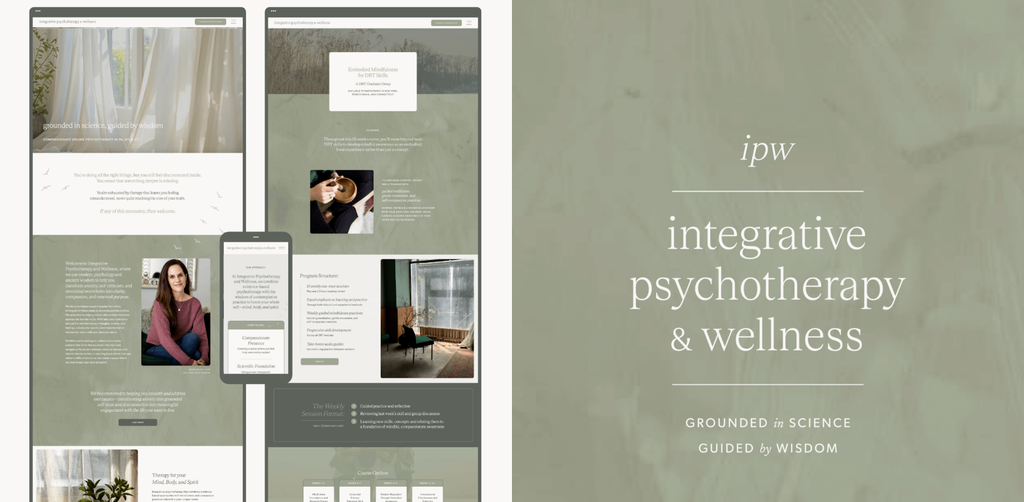
Integrative Psychotherapy & Wellness is an online therapy practice led by Hilary Bucell, LCSW, who sees clients in Pennsylvania, New York, and Connecticut. Hilary helps her clients reconnect with themselves and make lasting changes, so her brand needed to feel steady and welcoming.
I created a soft, earthy color palette, custom hand-drawn illustrations, and nature-inspired textures that give her website a peaceful, open feel. The result looks elegant and expert while still feeling approachable for someone reaching out to a therapist for the first time.
Rise Neuro Rehab
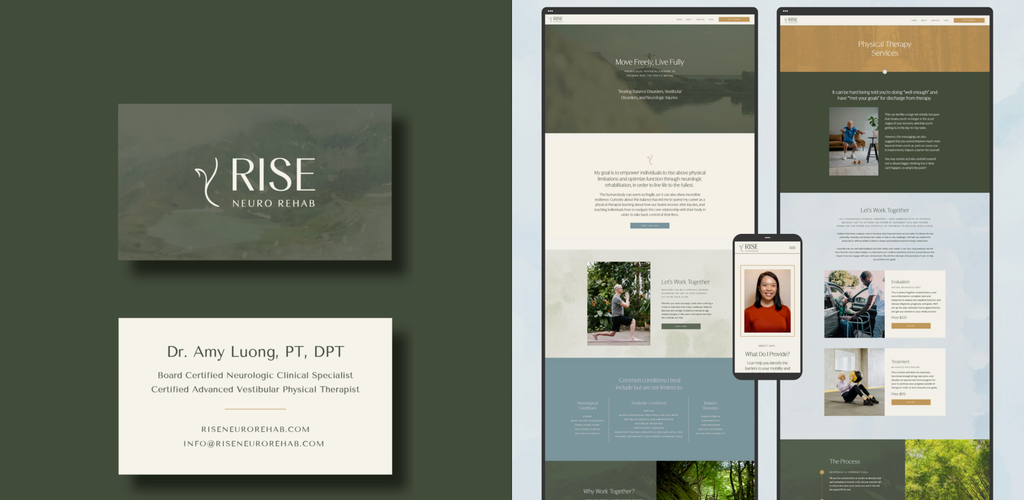
Rise Neuro Rehab is a neurologic physical therapy practice in Tacoma, Washington. Amy, the owner and physical therapist, helps patients with balance challenges, vestibular conditions, and neurologic injuries.
Amy wanted her brand to feel hopeful and welcoming to every patient who walks through her door, so I kept the visuals gender-neutral and drew inspiration from the Pacific Northwest landscape around her. Soft, flowing shapes and earthy tones give the brand a sense of forward movement that fits the work she does with her patients.
Community Connections Therapy
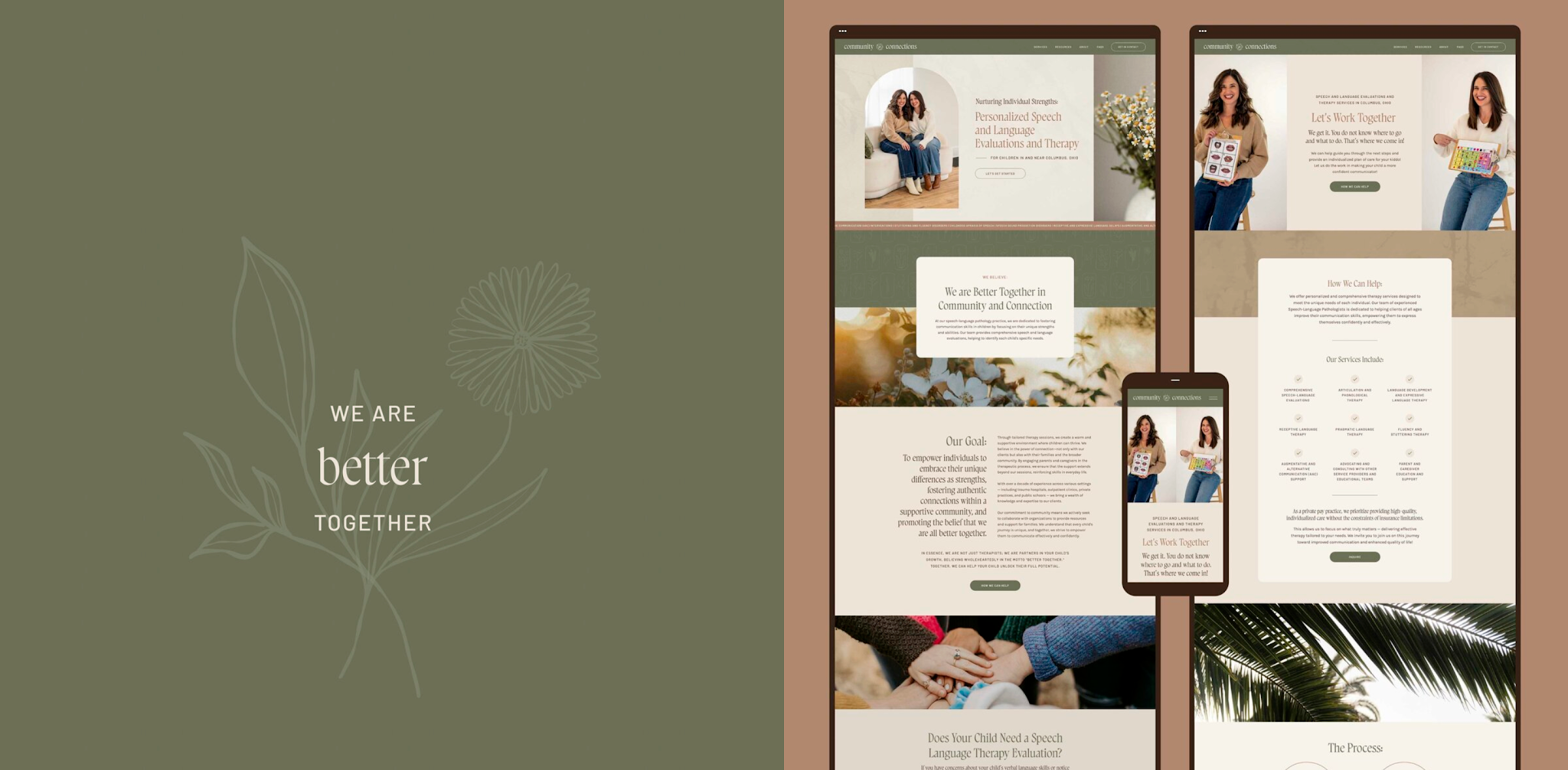
Community Connections Therapy is a speech and language therapy practice in Columbus, Ohio, founded by twin sisters Victoria and Christina. Their practice supports children and parents through therapy, education, and involvement in their local community.
They wanted a brand with a warm, slightly boho feel and a clear message of inclusion. Their logo features a circle of different plants growing together, a nod to the diverse families they serve. Deep greens and natural brand elements tie the website together and make it feel friendly and grounded.
FAQs
Do I need a website designer who specializes in health and wellness?
You don’t have to hire a specialist, but it often makes the process smoother, safer, and better. A health and wellness website designer already understands things like HIPAA-compliant forms, disclaimers, and the difference between coaching and licensed care. A general designer can still build a great website, but you may end up researching and explaining these details yourself.
Does my health and wellness website need to be HIPAA compliant?
It depends on your practice and how potential clients are getting in touch with you. If you’re a HIPAA-covered provider, such as a therapist or medical practice that bills insurance electronically, and your website forms collect protected health information, those forms need to be HIPAA-compliant. That usually means using a secure form that will sign a Business Associate Agreement (BAA) with you.
Many wellness coaches and other non-covered providers aren’t bound by HIPAA, but it’s still smart to keep sensitive health details off a standard contact form.
How can my practice appear in ChatGPT and Google AI Overviews?
AI tools pull from websites that clearly explain who you are, what you offer, and who you help. Give each of your core services its own page, use descriptive headings, and answer common client questions directly in your copy. Make your credentials, location, and contact details easy to find, and keep that information consistent across your website and online listings like your Google Business Profile. A blog with helpful, specific articles also gives AI tools more content to reference, so I often recommend that my clients start one (but it’s not required).
How much does it cost to hire a health and wellness website designer?
It can vary a lot depending on the designer’s experience and what’s included. My custom brand and Showit website design packages start at $4,000. Your final investment depends on things like how many pages you need and whether you’d like add-ons such as additional marketing materials. After a consultation call, I’ll put together a clear proposal with a custom site map so you can see what I’m recommending and how much the investment is.
You can see more details on my services page.
Ready to Work with a Health and Wellness Website Designer?
Your website design plays a crucial role in whether people trust you.
In a study of how people evaluate online health websites, researchers at Northumbria University found that design appeal predicted whether participants rejected or mistrusted a site, and 94% of their comments about rejecting a site related to its design.
When someone is searching for help with their health, a cluttered or dated website can make them wonder how much care goes into the rest of your practice. Trusting someone with your health is a big decision, so many will click back to the search results and reach out to someone else instead.
If you’re looking for a designer who understands health and wellness, builds custom brands and websites, and will guide you through each step with a clear, organized process, I’d love to hear about your practice.
Learn more about my services or get in touch to schedule a complimentary consultation call!


