Home Services Website Design: 7 Tips to Book More Clients
Home services website design is one of the smartest investments you can make in your business because your website is usually the first impression a potential client gets of you.
Before someone hires a landscaper, calls a contractor, or books a home organizer, they look you up online. What they find in those first few seconds largely determines whether they reach out or not.
A thoughtful website does a lot of the convincing on your behalf, answering questions, building trust, and helping the right local clients feel confident about inviting you into their homes.
Here are my 7 tips on designing a home services website that books more clients, as a creative brand and website designer for home service companies. I’ll also share real-life examples you can use for inspiration!
Why Home Services Website Design Is Important
A strong home services website builds trust with potential customers, and it sets you up to be found when people search for your services on Google and AI tools.
When I say “home services,” I mean the wide range of businesses that help people care for, improve, and enjoy their homes. That includes landscapers, general contractors, custom cabinetry makers, interior designers, home organizers, cleaners, real estate agents, and plenty of other trades in between.
For all of these businesses, your clients are inviting you into a personal, private space, so the bar for trust is high. Someone visiting your website is often looking for help with a project they care about, and a clear, professional website reassures them that they have found the right person for the job.
Here’s how a well-built website helps grow your home service business:
- It gives your business instant credibility and signals that you are an established, trustworthy professional.
- It improves your visibility in local search, so homeowners in your area can actually find you when they go looking on Google or AI tools.
- It generates better-qualified leads by attracting people who want the services you offer.
- It sets you apart from competitors whose sites feel generic or thrown together.
- It reduces a potential client’s hesitation by answering their questions and easing their concerns upfront.
Each of these adds up to more of the right people reaching out, and fewer mismatched inquiries clogging your inbox. In fact, research shows that great UX design can drive conversion rates by up to 400%.
Home Services Website Design: 7 Tips
1. Build a Solid Brand Strategy
Before you think about colors, fonts, or photos, get clear on your brand strategy. This is the foundation that defines your business: who you serve, the services you want to be known for, your values, and the qualities that make homeowners choose you.
Your home service web design needs to be clear and specific, with your copy, visuals, and overall feel pointing to the same kind of client and distinctly articulating your business. It can be tempting to skip this step, but without that groundwork, even an attractive website can feel scattered and pull in inquiries that are not the right fit.
How to put this into practice:
- Write down the specific type of client and projects you want to be known for.
- Name the two or three things that make your business trustworthy and different.
- Let that positioning guide the visuals and copy on your website.
This upfront strategy makes for a much more successful home services website.
2. Prioritize Local SEO
SEO stands for search engine optimization.
It’s the practice of setting up your website so it appears when people search for what you offer. Local SEO is the same idea focused on your geographic area, so your business comes up when someone nearby types something like “landscaper in [city]” or “home organizer near me.”
One of the best ways to strengthen local SEO is to create individual service pages optimized for your area. Don’t cram everything onto one page. Instead, give each core service its own page with location-specific language.
Portfolio-only websites rarely do well. When a website is mostly images with very little writing, Google and AI tools have a hard time understanding what it’s about and who it’s for.
I always recommend pairing your work with thorough, educational content that speaks to the questions your local clients are asking.
Good SEO largely comes down to two things:
- Your copy needs the right keywords used naturally, and
- Your website needs to be in good technical health
“Good technical health” means fast-loading pages, mobile-friendly website design (64% of Google searches happen on a phone), and clean details like descriptive image alt text. Google prioritizes fast, mobile-friendly sites to feature in search engine results.
What about AI search?
AI search is when people ask a tool like ChatGPT, Google’s AI Overviews, or Perplexity a question and get a direct, written answer for their unique situation. The AI tool pulls from websites it trusts and often names its sources in the answer.
About 42% of US adults now use AI chatbots to search for information, so being the business an AI recommends is increasingly important, especially for businesses with local customers like cabinetry, real estate management services, interior design services, and more.
Optimizing for Google (SEO) and optimizing for AI are different processes, but there’s a lot of overlap. Strong SEO tends to feed strong AI visibility, because both reward clear, helpful, well-organized content on a technically sound website.
That said, a few tweaks help you specifically on the AI side:
- Answer common client questions directly, in plain language, so AI tools can get a clean answer from your page.
- Use descriptive, question-style headings that match how people ask about your services.
- Plainly state the concrete facts an AI needs to recommend you, like your service area, credentials, and what you offer.
- Keep your business details consistent everywhere online, including your Google Business Profile and any directories.
In 2026 and beyond, digital marketing requires you to take both SEO and AI search into consideration.
3. Build Trust With Social Proof
People are cautious about who they invite into their homes, and rightly so.
Social proof reassures hesitant visitors that other homeowners hired you and were glad they did. Customer testimonials are a must for professional home services, and they become even more valuable when you connect them to a project or case study on your website.
Video testimonials are a good idea too, since 77% of people say they trust video reviews when making a purchase decision. It also helps to display your best reviews and any trust badges prominently on your homepage, where visitors see them first.
Beyond reviews, if you are licensed, insured, bonded, or offer a warranty, say so clearly. Being transparent about pricing or financing builds credibility upfront, too.
How to put this into practice:
- Add testimonials throughout your site and tie them to projects where you can.
- State your licenses, insurance, warranties, and pricing clearly.
- Include before-and-after photos of completed work when it applies to your service.
Also, use real photos instead of AI-generated ones. If you don’t have high-quality brand photography yet, you can use stock images, but you want visuals that look real and not generic.
4. Introduce Your Team
Home services are personal. Someone is going to open their door and let you into their space, and introducing your team on your website makes that decision far more comfortable.
Include high-quality photos of yourself and any staff, along with a few sentences about who you are. Photos of your actual team build more trust, and seeing a face puts a person behind the service and makes reaching out feel safer. Skip stock photos of models in favor of your own crew.
5. Make It Easy to Get in Touch
Once someone decides they want to work with you, getting in touch should take almost no effort. A confusing or cluttered contact page loses people, so pick one clear primary action, whether that’s filling out a short form, booking a consultation, or calling you, and make it obvious.
Many home services visitors are looking for help quickly, sometimes urgently, so remove any friction in their way! If you want people to call you, add a tap-to-call phone number for mobile visitors.
6. Demystify Your Process
When someone hasn’t hired a business like yours before, the unknown can hold them back. A “How It Works” or “Our Process” section clears that up by walking visitors through what working with you looks like, step by step, from the first call to the finished project.
Laying out your process eases anxiety and sets clear expectations. It also helps you, because someone who understands your approach before reaching out is more likely to be a good fit. I often recommend pairing this with a short FAQ section that answers any lingering questions.
How to put this into practice:
- Outline your process in a few clear, numbered steps.
- Tell visitors what to expect at each stage and roughly how long it takes.
- Add an FAQ that answers the questions clients ask most.
Clarity here helps you attract more leads and convert better-fit clients.
7. Showcase Your Work With Quality Photos
For most home services, seeing is believing. High-quality photos of your finished work give potential clients a concrete sense of what you can do and whether your style fits theirs.
For nearly all home services websites, I recommend having a well-organized portfolio or project gallery page. Before-and-after shots can be very powerful, because they show a visible transformation.
However, don’t let your website become nothing but images. Pair your photos with a bit of writing so your pages have enough context for your leads and search engines to understand them.
Home Services Website Design Inspiration
Sometimes the most helpful thing is to see what’s possible in practice!
Here are a few home services website design examples and brand projects from my portfolio, spanning landscaping, remodeling, home organizing, custom cabinetry, and real estate.
Native Landscapes & Gardens
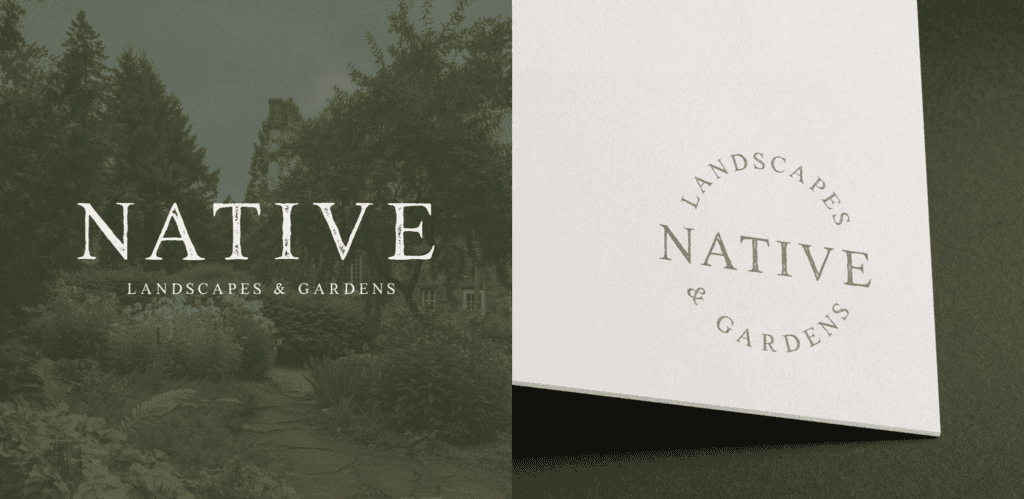
Native Landscapes & Gardens is a Cleveland, Ohio landscape and garden design company owned by Marc, who creates sustainable, eco-friendly outdoor spaces built around low-maintenance native plants. His brand identity is earthy and refined, with natural tones and a handcrafted feel that mirrors the way he works with the land.
Beck Interiors
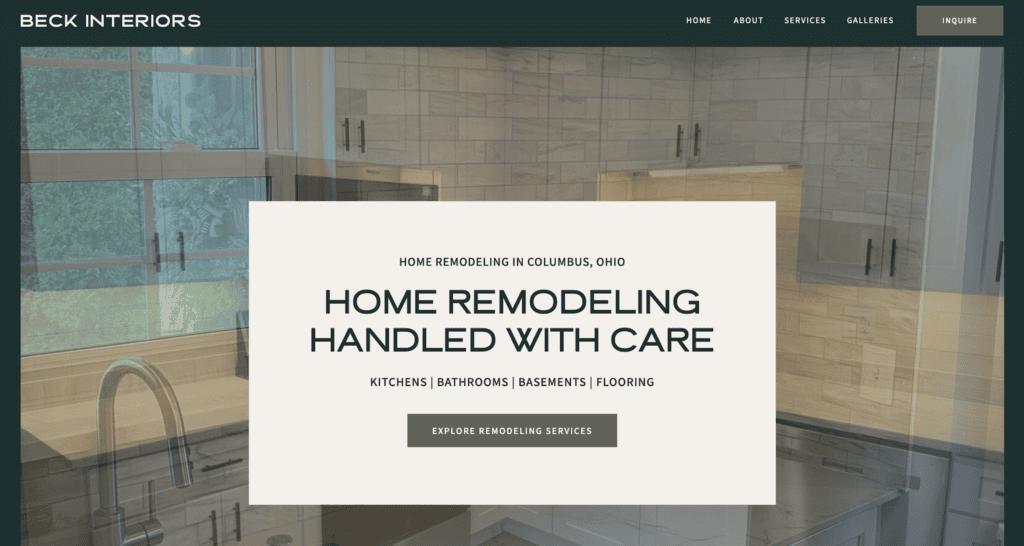
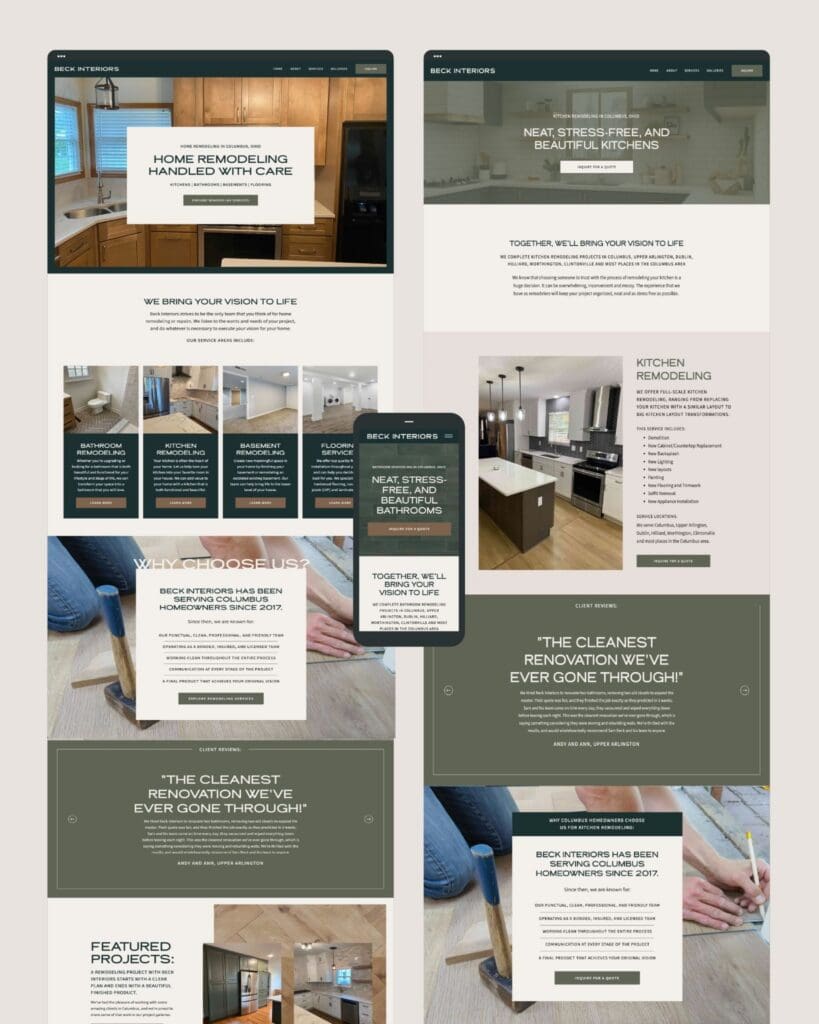
Beck Interiors is a home remodeling company that has served Columbus, Ohio since 2017, handling kitchens, bathrooms, basements, and flooring with a bonded, licensed, and insured team. Their website is a strong example of local SEO in action, with a dedicated page for each type of remodel and client testimonials connected to specific projects and nearby neighborhoods.
Happy to Help Organizing
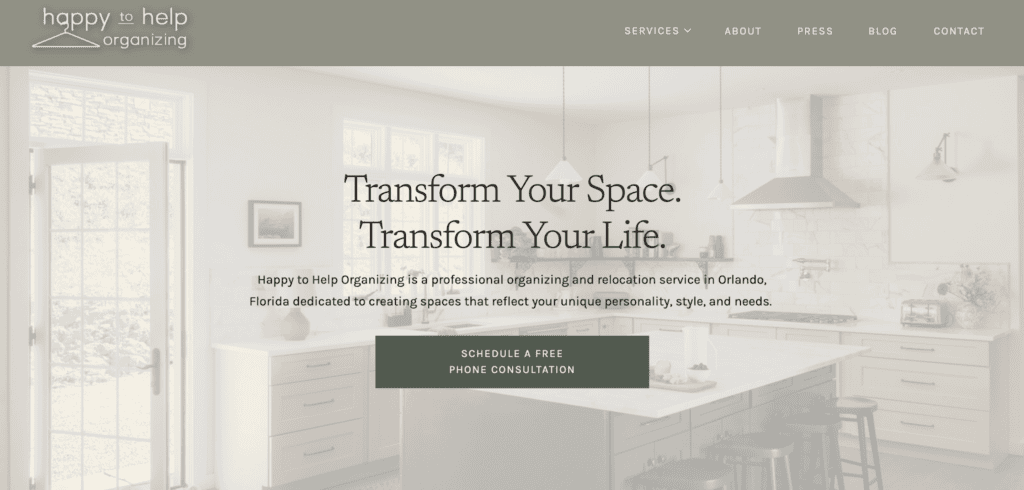
Happy to Help Organizing is a professional organizing and moving service in Orlando, Florida, led by founder Becki McKenna, who helps busy families declutter, organize, and settle into new homes across Central Florida. The refreshed website gives each service its own page and names the cities she serves, so local clients can quickly see that she what’s available in their area.
Oxendale Woodcraft
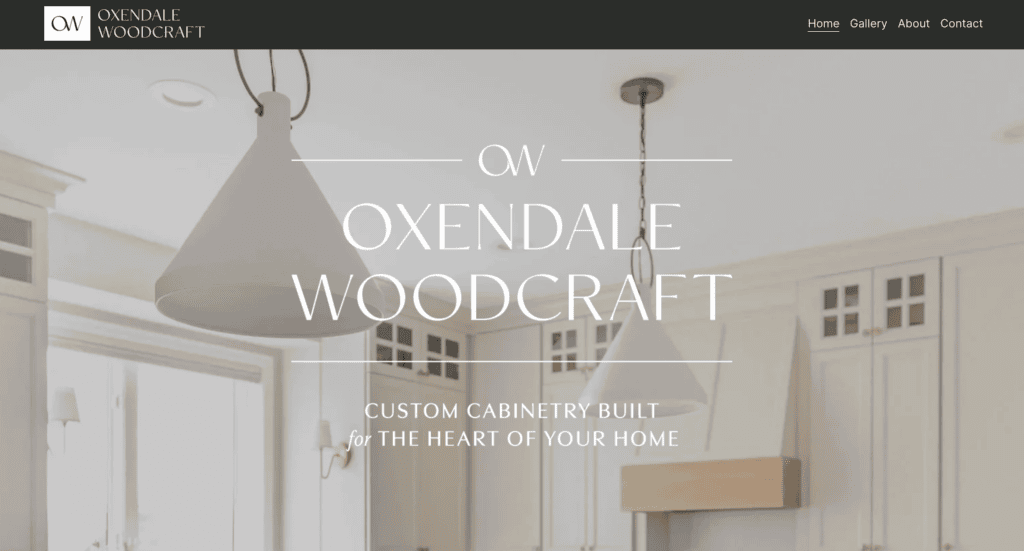
Oxendale Woodcraft is a custom cabinetry maker in the Twin Cities, run by Dan, who builds everything from kitchens and islands to built-ins and mudrooms in his own shop. The brand has a warm, craftsman feel that reflects the quality and care behind the woodwork.
Ohana Homes
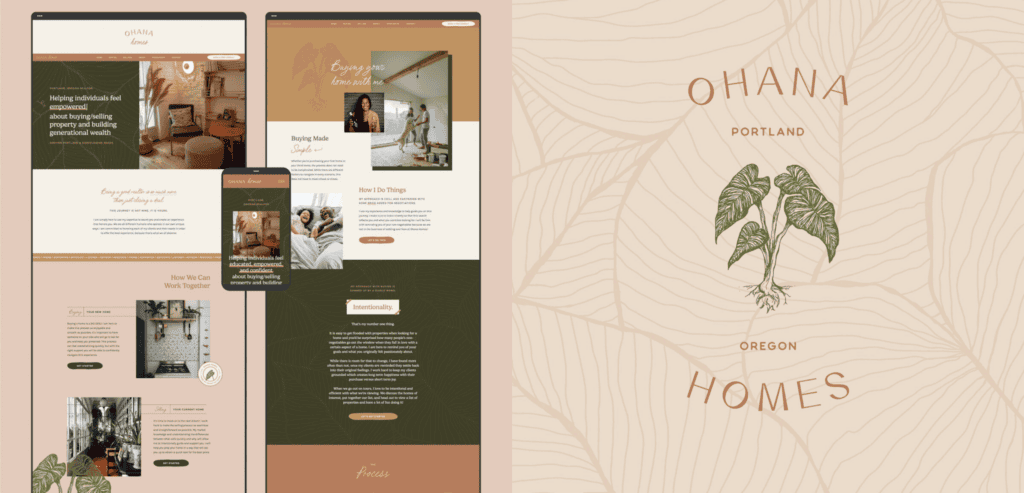
Ohana Homes is a Portland, Oregon real estate brokerage led by Mercedes, who helps people feel confident and informed as they buy and sell homes and build lasting wealth. Her custom brand and Showit website are warm, approachable, and easygoing, which puts first-time buyers and sellers at ease from the moment they find her.
What Website Builder Should I Use for Home Services Website Design?
The platform you build on largely determines what your website can and cannot do, on both a creative and a technical level. For home services businesses, I recommend Showit.
Showit is a drag-and-drop platform for creatives and small business owners, and it gives you full control over how every part of your website looks and feels. You can design each element exactly the way you want for a fully custom and unique look.
It integrates with WordPress for blogging, which is excellent for SEO. The editor is user-friendly, so updating your site down the road is easy, and the support team is responsive and quick to help when questions come up.
Other builders like Squarespace, Wix, and WordPress can work too, but in my experience, none of them balance design freedom, a strong technical side, and ease of use the way Showit does.
Looking for Custom Website Design for Home Services?
I’m Rose, a brand and Showit website designer based in Columbus, Ohio. I partner with home professionals, along with health, wellness, and creative businesses, to build sophisticated, strategy-first brands and websites that connect with the right clients.
At the beginning of your project, we’ll get clear on your brand strategy, including what sets you apart and how you want potential clients to feel when they find you. Then, I create a custom brand and Showit website that helps you build trust, stand out from competitors, and book more of the work you love.
If you’re ready for a website that brings in better-fit local clients, take a look at my design services or get in touch to start the conversation!


